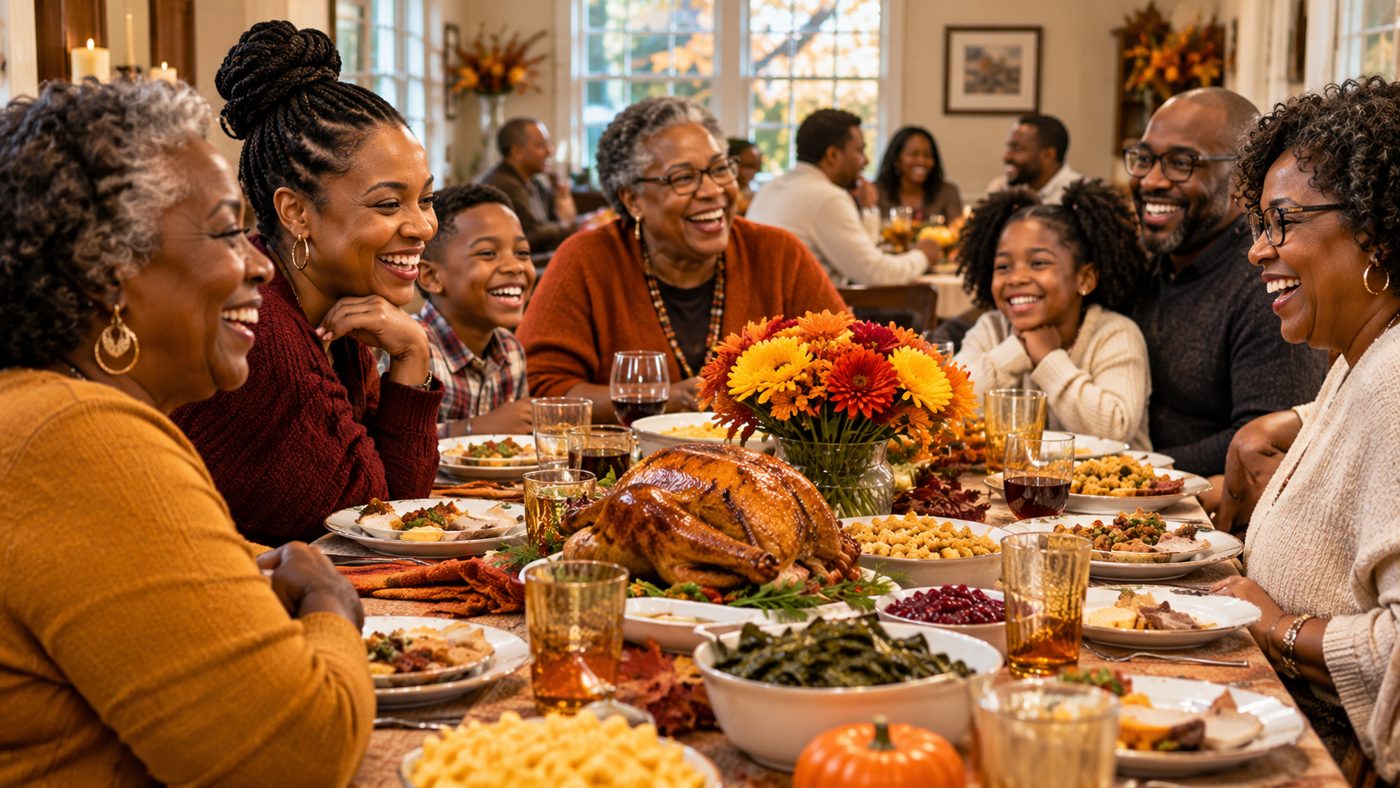
However your table looks this year, there’s room for gratitude.
This month, many of us will gather around a table. Some tables will be crowded and loud. Some will be quiet. Some will have an empty chair that still takes our breath away. However your table looks this year, I hope you’ll find a moment of gratitude there.
Like last year and maybe years before that, this has been one heck of a year. I am grateful for you. Thank you for reading, for sharing the Journal with the women you love, and for continuing to trust IAWH to provide you with evidence-based information that can help you better advocate for your health and the health of your family.
The Stories at Our Tables
Thanksgiving Day is also National Family Health History Day. In October, I shared how high blood pressure has impacted many women in my family: my grandmother, my mother, her sisters, my sisters. Similarly, you probably have a family health story. Every family has stories like that. Who had “sugar.” Whose heart gave out too soon. Which aunt had the surgery that nobody really talked about, but she had to stay in bed for weeks, not going to work. We tend to whisper these things, or not say them at all. But to your doctor, your nurse, or other health professionals, they are clues. Knowing these stories and conveying them when you need to can change when you get a health screening, which test you are given, and what you may need to watch for in yourself.
For many families, that unexplained surgery was a hysterectomy for uterine fibroids. In this issue, Sateria Venable, Founder and CEO of The Fibroid Foundation, talks with IAWH about why fibroids are so often missed and why hysterectomy should not be the only option women hear about. Read A Conversation on Uterine Fibroids with Sateria Venable. It is a preview of our July 2027 Special Issue on uterine fibroids.
Our family’s story is not our fate. It is our head start.
A family history of a disease does not mean you will get it or experience the same outcome. A family health history can help you know where to look first. And that knowledge is a gift we can pass on to the next generation, too.
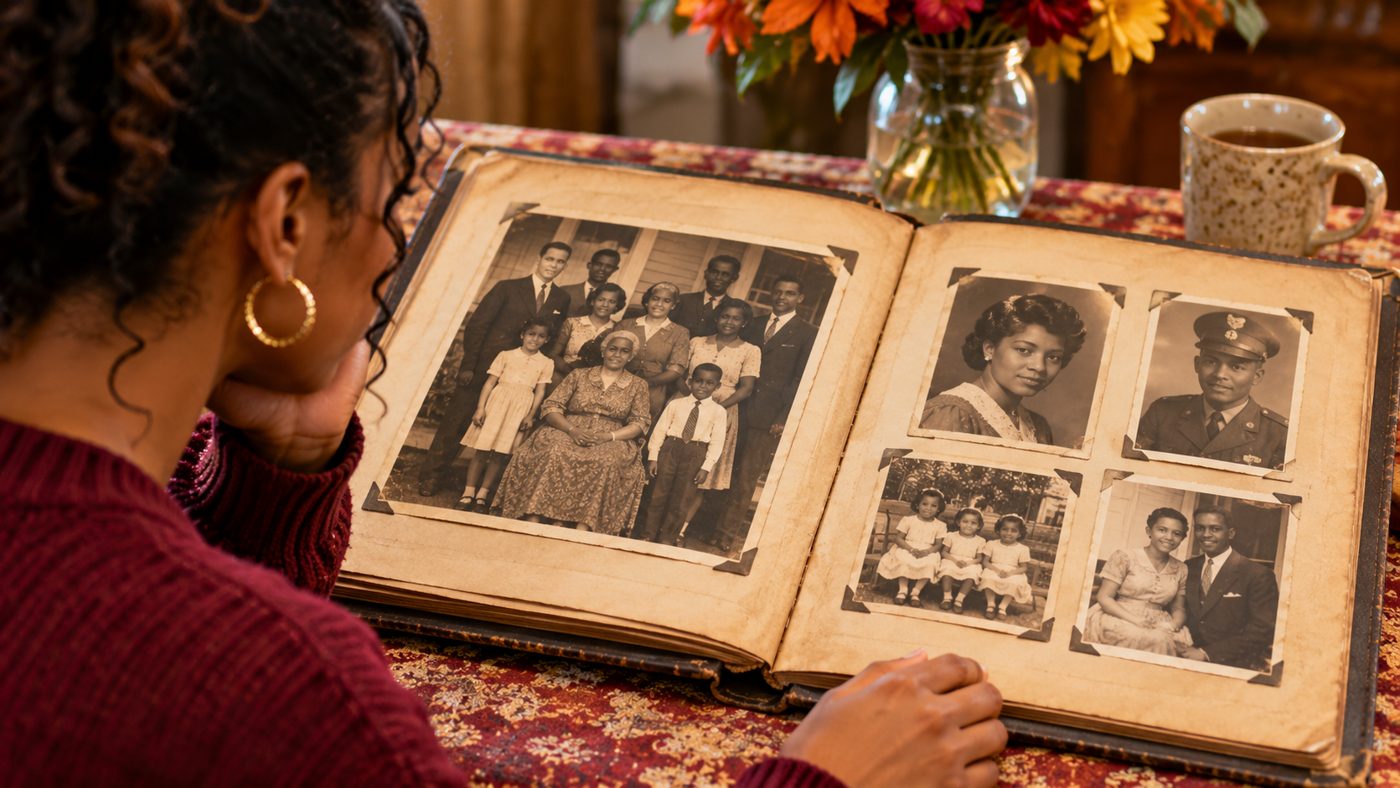
Some of the best conversations happen away from the crowd.
Start the Conversation
You don’t need a formal sit-down. Ask a question before you go for that second helping of macaroni and cheese, or after dinner. Pull out the photo album. (Yes, the physical photo album because many relatives’ images pre-date our smart phone photo albums.)
For more ways to get the conversation going, and how a family health history can change your care, read Your Family’s Health History Is Your Best Head Start.
To help, we made something for you: the free, printable Around the Table Family Health History Kit. Download your free kit. Then share a copy with your sisters and brothers. It’s their story, too.
This Thanksgiving, Do Three Things
The name of this column comes from Ubuntu: I am because we are. Our health histories have never belonged to just one of us. They are written across generations, at kitchen tables and church picnics and family reunions. When we share them, we protect each other.
So pass the stories along with the sweet potato pie. With gratitude, from my family’s table to yours.
Cheryl J. Thompson, MSPH
Executive Director, IAWH Health
In This Issue | November 2026
- Your Family’s Health History Is Your Best Head Start · National Family Health History Day, with the free Around the Table kit
- A Grateful Heart: The Diabetes–Heart Connection Every Woman Should Know This Thanksgiving · American Diabetes Month
- Coverage Check: It’s Open Season. Don’t Let Your Health Plan Renew on Autopilot. · Medicare & Marketplace
- Coverage Check: Medicaid Is Changing. How to Keep Your Coverage. · Medicaid
- A Conversation on Uterine Fibroids with Sateria Venable · Feature Q&A
This column is for general education and is not medical advice. Talk with your health care provider about your family health history and your own health.
Free · Monthly · Evidence-Based
Get the IAWH Health Journal
Health news and practical guidance for women, delivered to your inbox once a month. Subscribe and never miss an issue.
Subscribe to the JournalAlready a subscriber? Share this page with a woman you love.