June: Brain Health and Alzheimer's Awareness Month
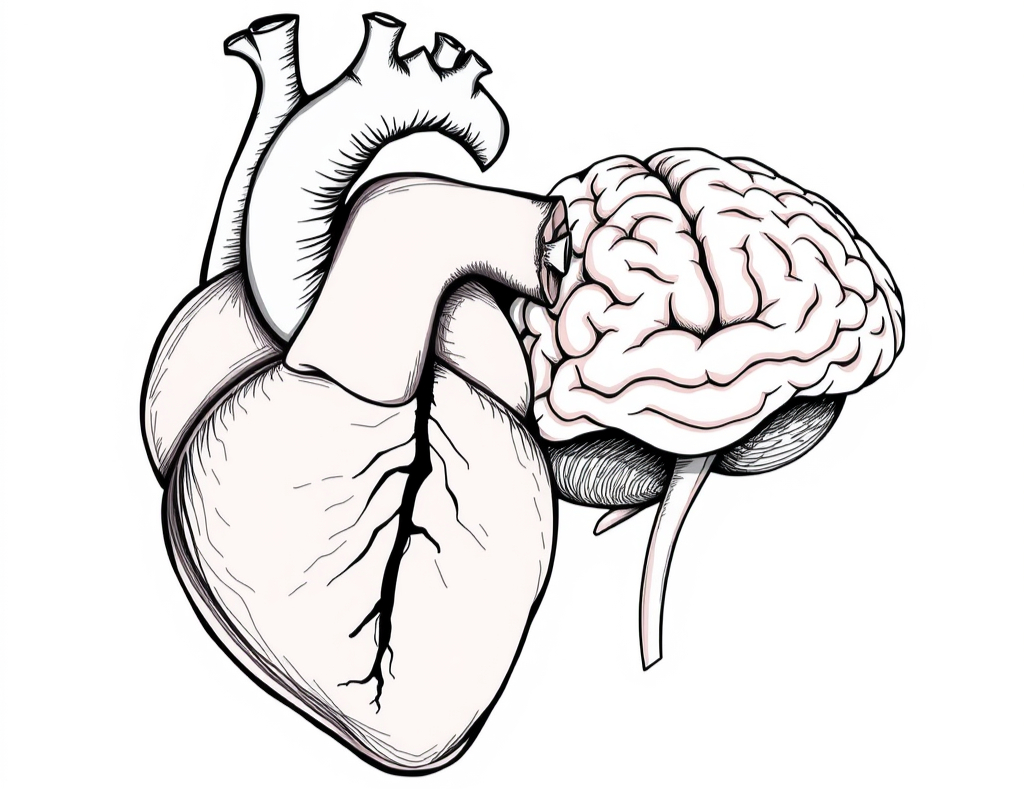
June is Brain Health and Alzheimer’s Awareness Month, a time to deepen our understanding of how our brains age, and how we might care for them more gently. But in the daily whirlwind of life, it’s easy to forget that what protects our brain isn’t just crossword puzzles and leafy greens. It’s also what strengthens our heart.
For women, especially those navigating caregiving, chronic stress, financial insecurity, and racial or gendered health disparities, the connection between heart health and brain health is more than academic. It is urgent and often invisible, until the toll from taking our health for granted becomes too much to ignore.
The Weathering of the Heart and Mind
Stress isn’t just “in your head”, it lives in our bodies. Repeated stress raises blood pressure, fuels inflammation, disrupts sleep, and alters hormones in ways that damage both heart and brain function. Over time, this chronic activation of the stress response system contributes to what researchers call “weathering”: the premature aging of the body and organs due to prolonged exposure to adversity (Geronimus et al., 2006).
For women, the weathering effect can be particularly profound. Those juggling multiple caregiving roles, navigating workplace stress, or living with systemic inequities may be especially vulnerable. The longer the stress continues, the higher the risk of both cardiovascular disease and cognitive decline.
What the Data Tells Us
- Cardiovascular disease (CVD) remains the leading cause of death for women in the U.S., claiming the lives of 1 in 3 women annually (American Heart Association, 2024).
- Two-thirds of Americans with Alzheimer’s disease are women, due in part to hormonal shifts post-menopause, longevity, and genetic risk factors like APOE4 (Alzheimer’s Association, 2024).
- Women with high blood pressure, diabetes, and obesity, all heart-related risk factors, have a significantly higher chance of developing dementia (Livingston et al., Lancet, 2020).
- In Virginia, approximately 164,000 adults 65+ live with Alzheimer’s, and over 346,000 unpaid caregivers, most of them women, provide care while often neglecting their own health (Alzheimer’s Association Virginia Chapter, 2024).
- From 2023 state data, over 56,000 Virginians were hospitalized due to CVD, with many of the highest burdens in Central and Northern Virginia (Virginia Department of Health, 2024).
The Science is Clear: What Helps the Heart Helps the Brain
Chronic stress has been directly linked to poorer cognitive outcomes. A recent Swedish study found that women diagnosed with stress-related disorders like PTSD or adjustment disorder had a 15–22% higher risk of developing Alzheimer’s or other dementias (Song et al., BMJ, 2020). Conversely, lifestyle interventions targeting cardiovascular health can dramatically lower risk. One long-term study showed that midlife aerobic fitness reduced dementia risk by up to 88% (Högström et al., Neurology, 2019).
That’s the hopeful part. Small, intentional steps, taken consistently, can protect both the heart and the brain.
The Power of Everyday Action
Here are several science-backed practices that anyone can begin now. We all have heard these before, but that is because evidence supports them. These aren't grand overhauls, they’re daily investments in your well-being.
- Move your body daily. Just 30 minutes of walking improves heart health, reduces inflammation, and supports neuroplasticity. Just stand from your desk or sofa and walk around for 10 minutes several times a day.
- Adopt brain-friendly eating patterns. The MIND diet, rich in leafy greens, berries, whole grains, and nuts, is linked to a 35–53% reduction in Alzheimer’s risk (Morris et al., 2015). Put down the second piece of pound cake and go for something like berries with yogurt and nuts sprinkled on top.
- Prioritize rest. Sleep is the brain’s maintenance system; during deep sleep, it clears toxins like beta-amyloid, which is implicated in Alzheimer's disease. Do what you need to do to ensure sleep, remove the television from your bedroom, hang room darkening curtains or drapes, keep your room a little cooler at night, stay hydrated before bedtime to avoid dry-mouth wake ups that disturb rest. If the pooch or the cat interferes with rest, train them to sleep away from the bed or out of the same room – for your health.
- Mind your stress. Practices like deep breathing, mindfulness meditation, or even five minutes of quiet reflection can lower cortisol and calm the nervous system.
- Stay connected. Isolation increases the risk of both heart disease and cognitive decline. Social bonds protect your body just as much as your brain.
- Engage your mind. Learning something new, reading, or playing music builds cognitive reserves essential for resilience as we age. Youtube is rife with how to videos. Take a class at your local library, or maybe you can volunteer at your local library to teach a class to help others learn a set of skills.
| Practice | Why It Helps | Actionable Tip |
|---|---|---|
| Move daily | Lowers blood pressure, boosts brain BDNF | Walk 30 min 5x/week, try dance or gardening |
| Eat smart | Mediterranean/MIND diet reduces CVD & dementia risk by ~35–53% (verywellhealth.com) | Add berries, nuts; swap red meat for legumes |
| Sleep 7–9 hrs | Clears amyloid, supports heart & brain | Stick to bedtime even on weekends |
| Mind stress | Therapy, meditation slow cognitive aging | Start 5‑min breathing breaks; try mobile mindfulness apps |
| Strengthen social ties | Reduces inflammation, protects against cognitive decline | Join a group, reconnect virtually, schedule daily check‑ins |
| Quit smoking & limit alcohol | Reduces vascular and Alzheimer’s risk | Use local cessation programs or apps |
| Tune in to mental health | Depression/stress double cognitive and heart risk | Screen regularly; seek therapy early |
| Stay intellectually engaged | Builds cognitive reserve | Learn a language, read, play instruments or brain games |
Care for the Caregivers
Over 60% of dementia caregivers in the U.S. are women. Many leave the workforce, reduce hours, or put their own health needs on hold to support others (AARP, 2023). That invisible labor is heavy—and without proper support, it can turn into its own health crisis. Self-care in these cases is not selfish. It is self-preserving. And it deserves to be a public health priority.
Where to Turn: Virginia Resources
- Alzheimer’s Association Virginia Chapter – alz.org/va Offers support groups, education, and local services.
- Virginia Department of Health Chronic Disease Dashboard – vdh.virginia.gov Track health trends across regions and access programs.
- Valley Health Women’s Heart Care – Provides gender-informed cardiology care in Northern and Central VA.
Final Reflection
In this moment, when the noise of the world is often louder than we can bear, and the burdens are just so many, let us not forget our own capacity to mend, strengthen, and renew. We can do this. The health of our heart and our brain are not separate pursuits. They are twins on an interrelated journey that could lead us toward the life we want to live, mentally capable of keeping all the memories of who we were.
Let June be the month we act, not out of fear, but from a commitment to our own well-being.
Citations
- American Heart Association. (2024). Heart Disease and Stroke Statistics – 2024 Update.
- Alzheimer’s Association. (2024). 2024 Alzheimer’s Disease Facts and Figures.
- Virginia Department of Health. (2024). Chronic Disease Burden Report.
- Geronimus, A.T. et al. (2006). "Weathering and Age Patterns of Allostatic Load Scores Among Blacks and Whites in the United States." AJPH.
- Song, H. et al. (2020). "Association of Stress-Related Disorders With Subsequent Dementia Risk." BMJ.
- Högström, G. et al. (2019). "Midlife Fitness and Dementia." Neurology.
- Morris, M.C. et al. (2015). "MIND diet associated with reduced incidence of Alzheimer’s disease." Alzheimer’s & Dementia.
- Livingston, G. et al. (2020). "Dementia prevention, intervention, and care: 2020 report." The Lancet.
- AARP & National Alliance for Caregiving. (2023). Caregiving in the U.S. 2023 Report.
Cheryl J. Thompson
Co-Executive Director, IAWH
This article first appeared on the IAWH Health blog on June 8, 2025 and is preserved here as part of the IAWH Health Journal archive. Information reflects what was known at the time of publication. This article is for general education and is not medical advice.