By Melissa Kluczynski, MS
The month of May is dedicated to National Stroke Awareness. Women face a higher risk for stroke than men, and stroke is the number four cause of death in women. And among women, black women have the highest prevalence of stroke. As many as 1 in 5 women in the U.S. will have a stroke each year, but the good news is that 4 in 5 strokes are preventable.
So what is a Stroke? A stroke is when blood flow to an area of the brain is blocked or when a blood vessel in the brain bursts. A stroke is a medical emergency and requires immediate treatment. Delaying treatment increases the risk for permanent brain damage or death.
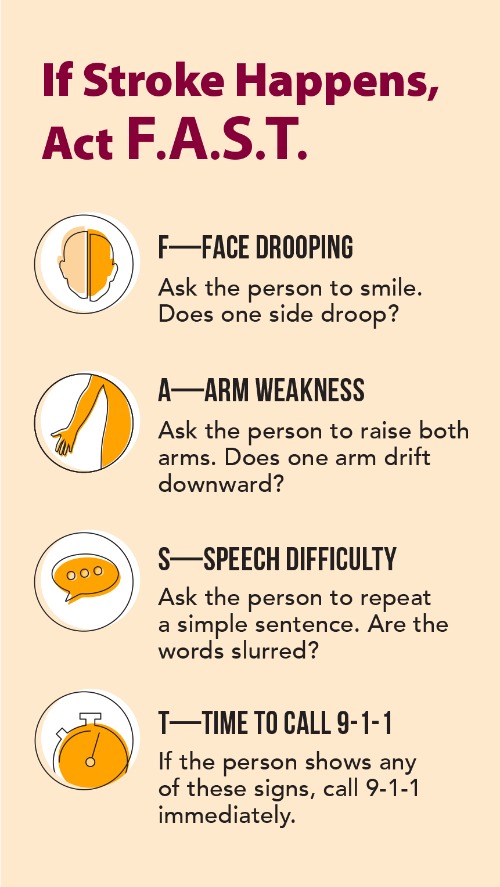
What are the Signs of a Stroke? Use the acronym, FAST, to help you remember the signs of a stroke: Face dropping, Arm weakness, Speech difficulty, and Time to call 9-1-1.
What are the Risk Factors for Stroke in Women?
- Hypertension (main risk factor)
- Increased age
- Depression
- Pregnancy
- History of preeclampsia (or high blood pressure during pregnancy)
- Taking birth control pills (especially among women with high blood pressure)
- Using hormone replacement therapy
- Migraines with aura and smoke
- Atrial fibrillation (or an irregular heartbeat)
Why are Black Women at Increased Risk for Stroke? Black women have higher rates of hypertension, obesity and diabetes compared to white women, all of which might contribute to a higher risk of stroke. Also Sickle Cell Disease (a common genetic disease in African Americans) and smoking may contribute to a higher risk of stroke among black women.
How Can Strokes be Prevented?
- Know the ABCs of heart and brain health: Aspirin may reduce the risk of a stroke but it is important to consult with a physician before starting any medicationBlood pressure- control your blood pressure with healthy lifestyle changes and blood pressure medications if neededCholesterol- manage your cholesterol with healthy lifestyle changes and cholesterol-lowering medications if neededSmoking- do not start smoking and if you do smoke, learn how to quit
- Make healthy lifestyle changes: Eat healthy by limiting your salt intake and increasing the number of vegetables, fruits, and whole grains that you consumeExercise regularly to maintain a healthy weight and keep your heart and blood vessels healthyGet at least 7 hours of sleep each nightReduce stress through calming activities like meditation and journaling
- Consult with your healthcare provider to determine your risk for stroke and how to get other health conditions, such as diabetes, under control
Sources:
American Heart Association. Risk of Stroke in Women Infographic. Accessed May 2, 2022.
https://www.goredforwomen.org/en/know-your-risk/risk-factors/risk-of-stroke-in-women-infographic
Centers for Disease Control and Prevention. Women and Stroke.Last reviewed April 5, 2022. Accessed May 2, 2022. https://www.cdc.gov/stroke/women.htm
Image : https://www.cdc.gov/stroke/women.htm
Melissa Kluczynski holds a Master of Science degree in Epidemiology from the University at Buffalo and she is currently working as a Research Associate in the Department of Cancer Prevention and Control at Roswell Park Comprehensive Cancer Center in Buffalo, NY. Her research interests include chronic disease prevention and women's health.
This article first appeared on the IAWH Health blog on May 5, 2022 and is preserved here as part of the IAWH Health Journal archive. Information reflects what was known at the time of publication. This article is for general education and is not medical advice.