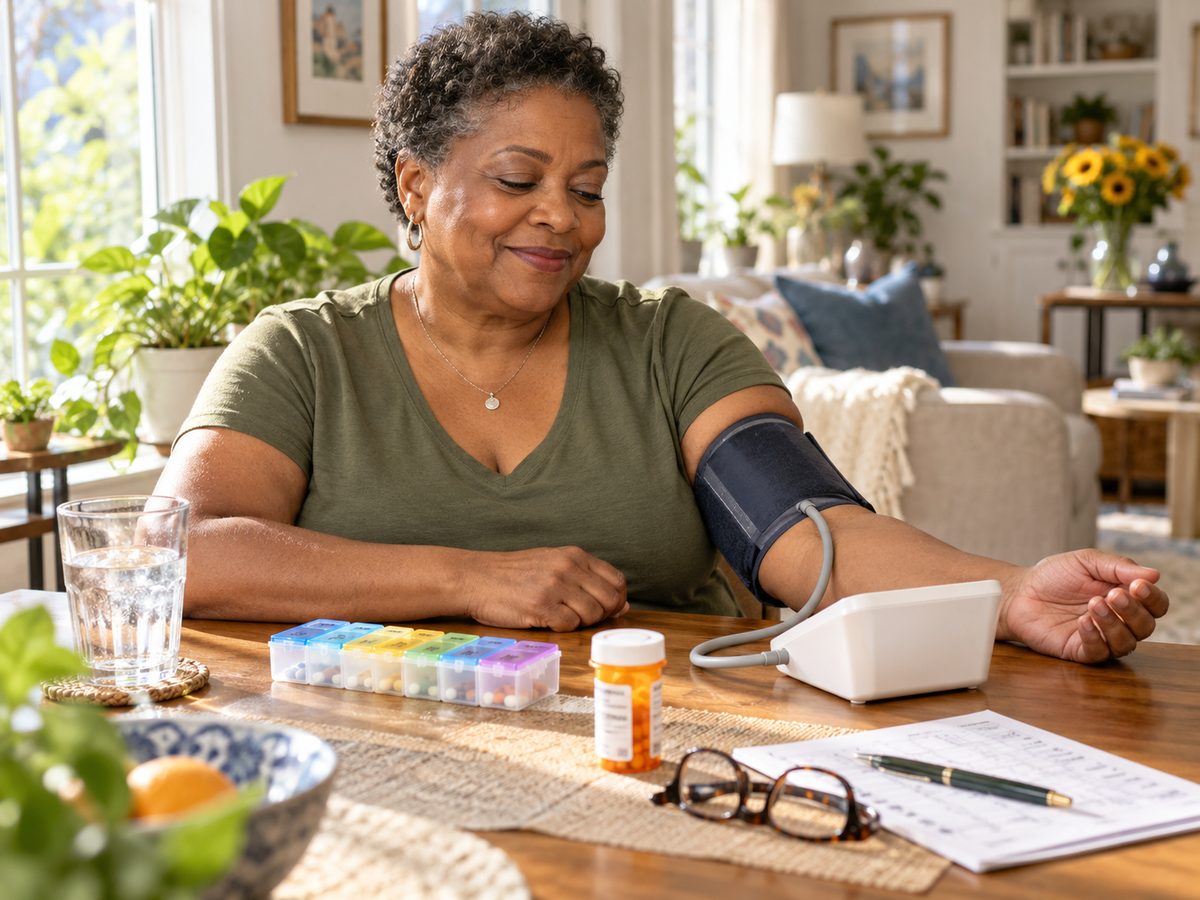
This week is National Women’s Blood Pressure Awareness Week, and I want us to talk about our numbers. Almost 60 million women in this country have high blood pressure or take medicine for it. Fewer than 1 in 4 women with high blood pressure have it under control (1). Those numbers are not strangers. They are our mothers, our aunties, our sisters, our friends, and very often, us.
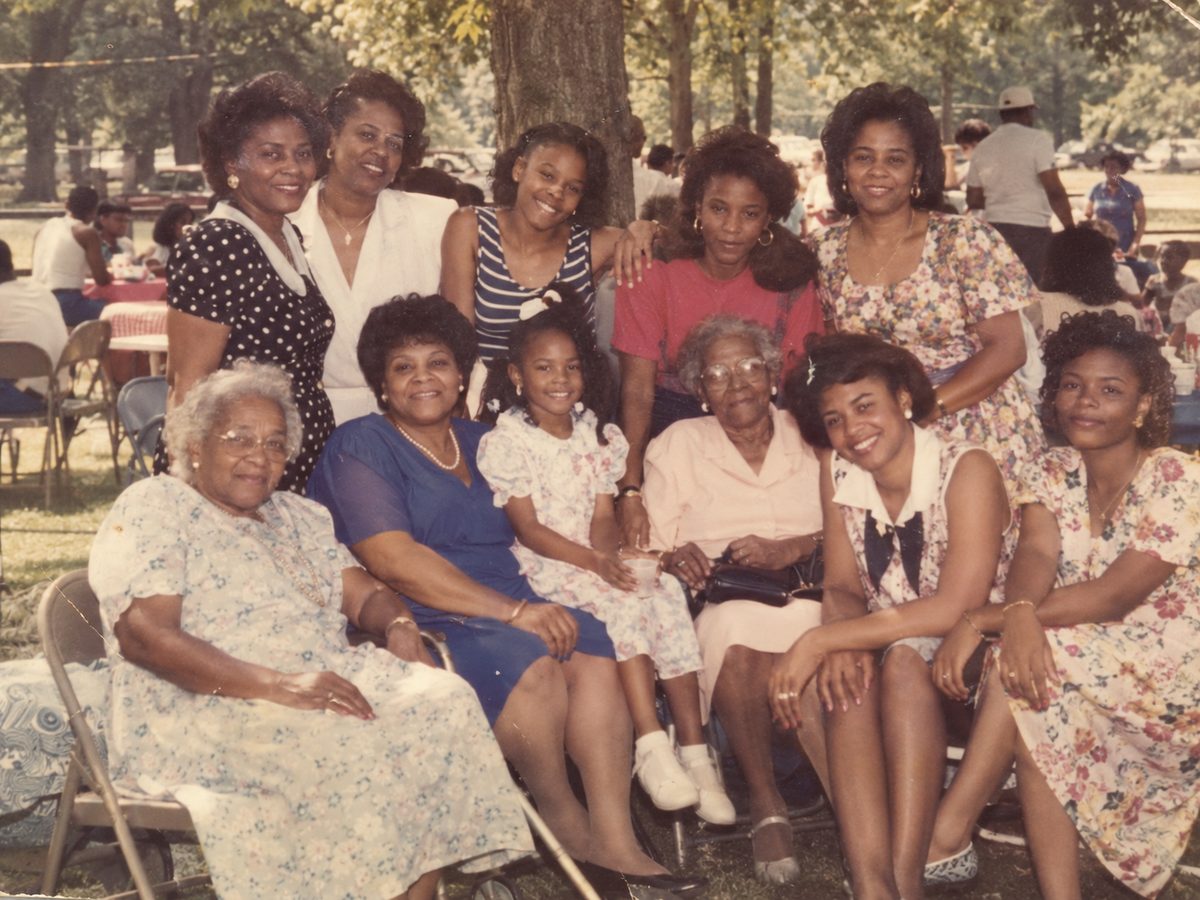
They are certainly my family. High blood pressure has run through the women in my family: my grandmother, my mother, her sisters, my sisters. I have watched the women I love manage the pills, the appointments, and the worry. So I don’t treat high blood pressure as someone else’s story. It is mine, too.
A little over a month ago, at my annual well-woman visit, my blood pressure was well within the normal range, controlled by medication. I want to say that plainly, because control is possible.
Medication is not a failure; it is a tool.
Taking it every day, checking my numbers, and showing up for my visits is what control looks like for me.
Watching All of Our Numbers
But knowing and watching our numbers means watching all of them. After that visit, I did what so many of us do. I rushed back to my hectic schedule and forgot to review my labs for myself. No one from the doctor’s office called, so I assumed there were no emergencies with my blood work. Then one morning, even before the sun was up, it hit me. I sat bolt upright, grabbed my phone and logged on to my patient portal to review results. My A1c, the measure of my average blood sugar over the past few months, had edged up. Just a hair.

Up a hair is enough to get my attention. Blood pressure, blood sugar, and heart health travel together, and the habits that protect one protect the others. I have spent my career in public health, and I know that “a hair” is how it starts. I am responding accordingly, because I do not intend to trip up into the type 2 diabetes range.
Protecting Our Minds
There is another reason to watch our numbers, and for many of us it hits closest to home: our minds. So many of us quietly fear the slow creep of dementia. We have watched a mother, a grandmother or an aunt lose names, then stories, then herself. What I want every woman to know is that high blood pressure is not only about the heart. The 2025 national high blood pressure guideline recognizes that it contributes to cognitive decline and dementia (2). The 2024 Lancet Commission on dementia named high blood pressure, diabetes and physical inactivity among 14 risk factors we can change, and estimated that addressing all 14 could prevent or delay nearly half of dementia cases (3). In the landmark SPRINT MIND trial, adults whose blood pressure was lowered more intensively had a significantly lower risk of mild cognitive impairment, the stage that often comes before dementia (4).
Protecting our blood pressure is one of the most powerful ways we have to protect our memories.
A Start I Can Keep
So I made a decision. I just renewed my Peloton membership, after several years away from that bike, and I’ll be honest, many pounds later. When it is impossible to make it to my local YMCA or when I let my mind talk me out of going to the pool, what I can do is clip in on my bike at home. My vow for now is to do a few low-impact rides with my favorite Peloton instructor, Alex, multiple times each week. Not a marathon. A start I can keep.
Here is my invitation and call to action. Join me (women and the men who love us) in moving our bodies at least 150 minutes each week, the national recommendation for adults (5). That is about 22 minutes a day, or 30 minutes on five days. Walk after dinner. Dance in the kitchen. Ride, swim, stretch, garden, chase the grandbabies. It all counts.

And This Week, Do Three More Things
1. Know your blood pressure numbers. Check them, and check them correctly. If you take blood pressure medicine, take it every day, even when you feel fine.
2. Read your labs. Don’t wait for a phone call. Log on, look, and ask questions.
3. Bring someone with you. Share this with one woman you love.
Free · Printable · Shareable
Your 7 Days Start Here
Know It. Own It. Control It.
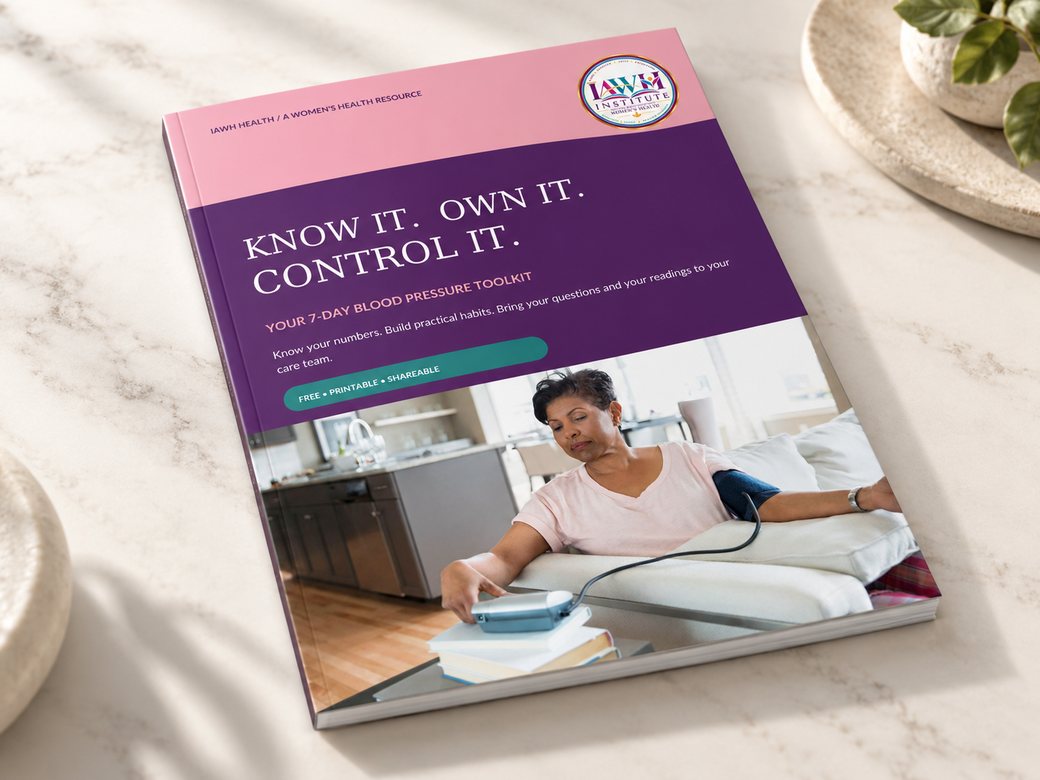
- A 7-day tracker for your morning and evening readings
- A daily action plan, one small step at a time
- How to check your numbers correctly at home
- The questions to bring to your next visit
Then pass it on to one woman you love.
The name of this column comes from Ubuntu: I am because we are. My health has never been mine alone. It is tied to the women who came before me and the women who walk beside me now. When I watch my numbers, I am watching out for us.
So let’s check, and let’s move. Fifteen minutes at a time, together.
Cheryl J. Thompson, MSPH
Executive Director, IAWH Health
References
1. Office on Women’s Health. National Women’s Blood Pressure Awareness Week: Theme. U.S. Department of Health and Human Services; 2026.
2. Jones DW, Ferdinand KC, et al. 2025 AHA/ACC/multisociety guideline for the prevention, detection, evaluation, and management of high blood pressure in adults. Hypertension. 2025;82(10):e212–e316.
3. Livingston G, Huntley J, Liu KY, et al. Dementia prevention, intervention, and care: 2024 report of the Lancet standing Commission. Lancet. 2024;404(10452):572–628.
4. SPRINT MIND Investigators. Effect of intensive vs standard blood pressure control on probable dementia: a randomized clinical trial. JAMA. 2019;321(6):553–561. See also NIH, Does intensive blood pressure control reduce dementia?
5. Centers for Disease Control and Prevention. Adult Activity: An Overview. Based on the Physical Activity Guidelines for Americans, 2nd edition.