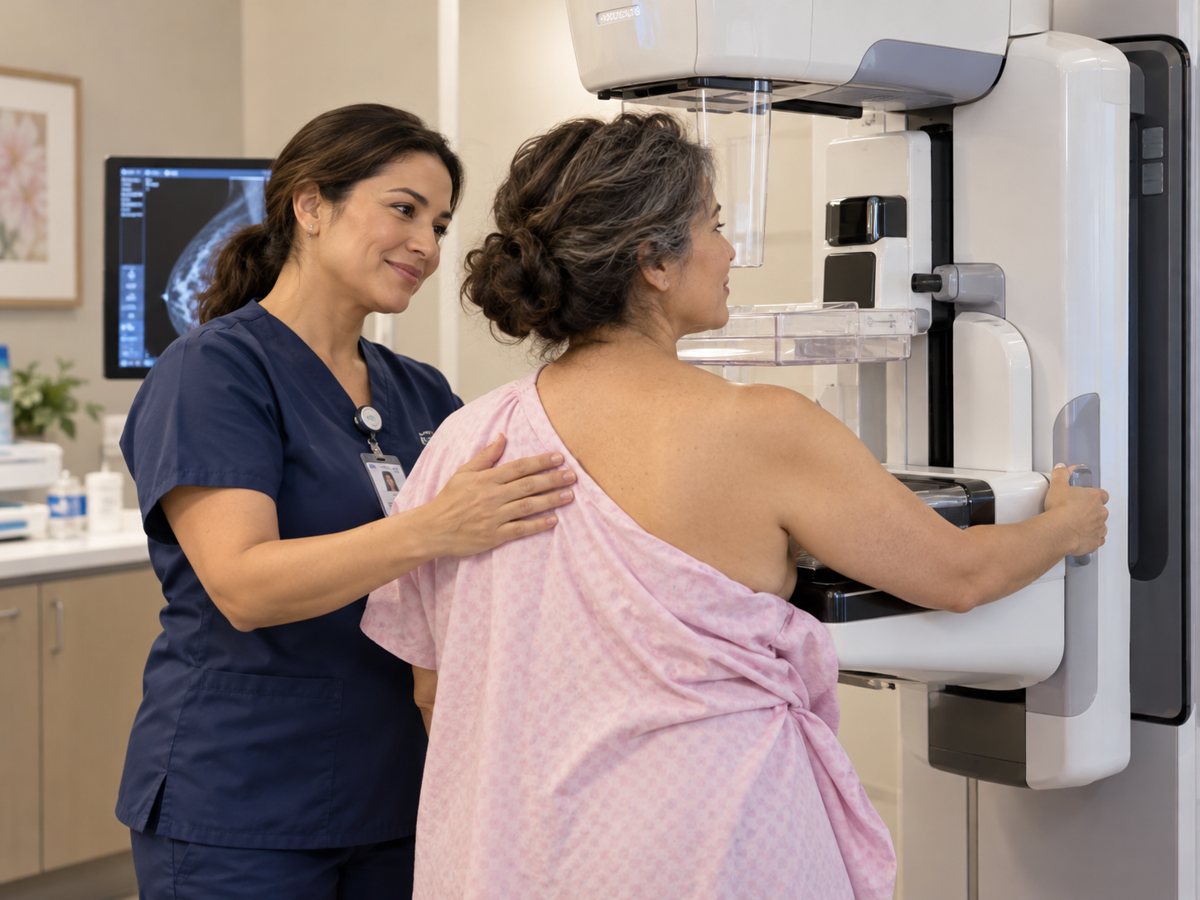
If you haven’t kept up with mammogram guidelines, you’re not alone. Two important changes in the last two years affect almost every woman over 40.
Screening now starts at 40.
In 2024, the U.S. Preventive Services Task Force updated its national recommendation: women ages 40 to 74 should get a mammogram every two years. The old guidance said most women could wait until 50. One reason for the change: Black women are about 40% more likely than white women to die of breast cancer, and are more often diagnosed younger, at later stages, and with aggressive triple-negative cancers.
You’ll now be told if you have dense breasts.
Since September 2024, the FDA requires every mammogram report to tell you whether your breast tissue is dense. Dense breasts are common and normal, but they can make cancer harder to see on a mammogram and are linked to a higher risk. If your report says “dense,” don’t panic. It’s a starting point for a conversation with your provider.
Questions to bring to your next appointment
- When should I start, and how often should I be screened, given my age and family history?
- Do I have dense breasts? What does that mean for me?
- Would I benefit from extra imaging, such as an ultrasound or MRI?
- Is my risk higher because of my family history or genetics?
- If something unusual shows up, how quickly will I get follow-up imaging?
Can’t afford a mammogram? The CDC’s National Breast and Cervical Cancer Early Detection Program offers free or low-cost mammograms to women ages 40 to 64 who are uninsured or underinsured and have a household income at or below 250% of the federal poverty level. Call 1-800-232-4636 or visit cdc.gov/breast-cervical-cancer-screening to find a program near you.
Coming soon from IAWH: So It’s Time for Your First Mammogram, a free guide to walk you through what to expect, step by step.
Sources
U.S. Preventive Services Task Force: Breast Cancer Screening (2024)
Becker’s: FDA’s dense breast notification requirement explained
This article is for general education and is not medical advice. Talk with your health care provider about your own breast health and screening plan.